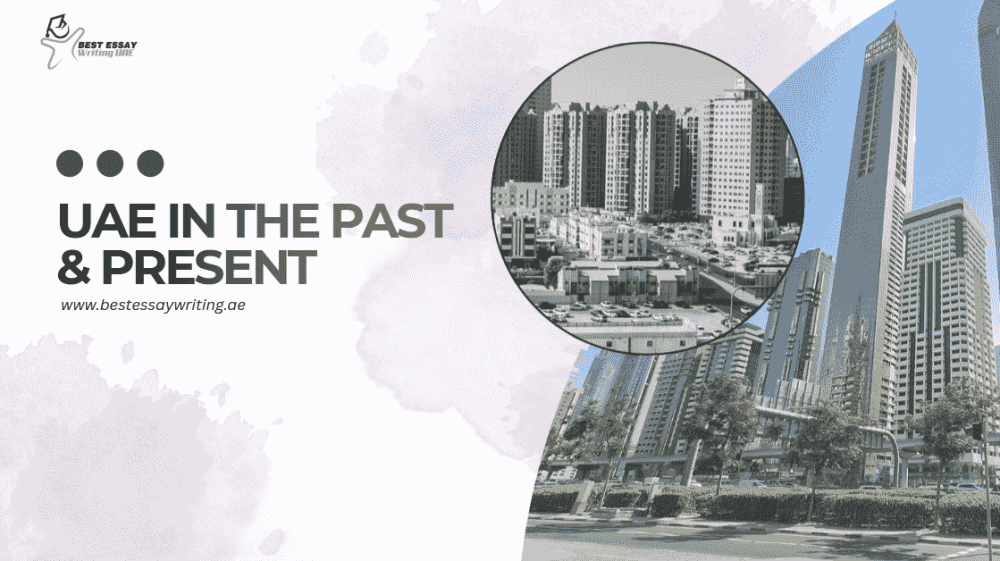
UAE in the Past and Present – Evolution of the Emirates
By Hira Jawaid | October 2, 2025The United Arab Emirates (UAE) currently is commonly regarded as a place of shinning towers, luxurious lifestyles, and international centers of innovation. However, behind such a contemporary picture, there is an amazing story of hope, change and perseverance. As students or researchers seeking Essay writing help may discover, the history of the UAE as a country and its development out of its small beginning into a prosperous state over the last several decades provides important clues to the way in which determination and solidarity can transform a nation within only several decades.
Background History: Before the Union
Before the oil was found and the Emirates were formed in 1971, the United Arab Emirates was made up of a group of small desert towns near the Arabian Gulf. They had a simple life, but pearl diving, fishing, and selling were how they made most of their money. Pearling was very important to the business, even though it was a hard and dangerous job. Families had to rely on clan unity, traditional hospitality, and a strong religious and cultural sense to get by in the harsh desert.
Health care and schooling were hard to get to, and the infrastructure wasn't very good. The simple towns made of clay and palm fronds showed how creatively people could make something out of nothing. Still, the Emiratis stuck to the strong values of unity, faith, and kindness that still shape the country today.
The Turning Point: Founding of the UAE
Abu Dhabi, Dubai, Sharjah, Ajman, Fujairah, Ras Al Khaimah, and Umm Al Quwain were the seven emirates that came together as a single party in 1971, led by Sheikh Zayed bin Sultan Al Nahyan. He wanted to build a strong, separate country, which is why the United Arab Emirates was created. Finding oil brought in money, and Sheikh Zayed was the only one who saw the big picture and made sure the money was kept for building things, medical care, and education.
That was the first step in the UAE's change. As more roads, schools, and hospitals were built, people quickly had more options. Women finally getting some attention in the workplace and in school was the slowest part of the move toward a more open society.
The Present: Contemporary International Center
Today, the United Arab Emirates is one of the most modern and active countries in the Middle East. A few of the world's tallest and most famous buildings are there, along with some of the world's most futuristic places and the best airlines. The UAE is now a center for trade, banking, technology, and tourism, in addition to being a place to live in style.
What inspires me more is how committed the country is to new ideas and environmental protection. As you can see, by its investments in space research and clean energy, Masdar City is getting ready to move away from oil. In the meantime, even though things change quickly, the UAE always keeps its customs alive through museums, cultural events, and keeping its buildings in good shape.
Conclusion
The United Arab Emirates isn't just about oil wealth or fast growth. It is also about stability, unity, and planning. The history of the Emirates is a strong reminder of what a country can do with the right leadership and drive, from the early days of pearl diving in small towns to the present day, when businesspeople built global companies. Anyone who wants to learn about how countries might find inspiration in the steps the UAE took to get where it is now.